
Month: July 2025

How to Sell Your Art ? Making The Most Out Of Art Shows

picture frame

One of the quickest and more effective ways to expose your art or crafts to the public is by opening a booth at an art or craft show. Thousands of people come to these art shows each year with the intention of buying something, and there doesn?t appear to be an end in sight.

Before you pack your bags and head out to the next show, you should definitely learn as much as you can about art shows. This type of work requires planning, research and various expenses, and may not be for everyone.

A great starting point is to visit http://www.sunshineartist.com. Sunshine Artist is a great magazine that covers art shows in detail. They provide listings of upcoming art shows and information on how you can participate. They also evaluate art shows and provide reports on sales, attendance, and other important details.

It may be a good idea to head out to your first art show as a visitor before actually setting up shop. Once you arrive, walk around and just observe how everything works. Observe the booths that have the most traffic and see what they are doing right. Introduce yourself to the booth owner and see if they are open to talking about their success with you. As long as they are not in direct competition with you, they should be happy to give you some pointers.

When you sell your work at an art show you are selling directly to the public. You make all of the profit. There is no need to share a huge percentage with an agent or gallery owner.

It is probably best to sell items at various prices to accommodate the different buyers that come to your booth. If you typically sell paintings for thousands of dollars, offer smaller, more affordable prints as well. This way, your art can be available to everyone.

Make sure you can accept credit cards. Many people who visit art shows pay by credit card. If you aren?t set up to accept credit cards, then you will more than likely lose sales.

Setting up and running a booth at an art show can be challenging. Bring a family member or friend along to help you set up and help customers. It?s also nice to have someone to keep you company and provide support and encouragement.

Art and Craft shows are a great way to build a customer mailing list. Set up a little section at your booth inviting customers and browsers to provide you with their name, address, and email address. Next time you attend an art show, you can send out a mailer to your list. You can also let your mailing list know about any new art or crafts you have for sale. It may not be easy to build a mailing list, as people are a bit hesitant when it comes to parting with personal information. To entice people to join, you can offer something for free. You could create small color postcard prints of your work and put them in inexpensive frames and give those away to each subscriber.

Make sure you keep track of your expenses and sales. You want to determine if you actually made a profit, otherwise you may have to make adjustments or possibly not attend the same art show again.

Don?t get discouraged if you don?t make a huge profit your first time out. Like I said in the beginning, art shows may not be for every artist. Many artists sell at art shows exclusively, while others only use art shows once in a while for marketing purposes.

Categories: Art Tags: Tags: , , ,

Great Techniques To Try On Your Next Watercolor Painting

If watercolor paintings are your style then here are some watercolor techniques you should try.

A Wash is a technique commonly used with watercolors. You start by wetting the area of the paper that will be covered with the wash. Then mix up enough pigment to fill the area and apply the pigment starting at the top and overlapping on any horizontal bands. The wash is then left to dry. Don?t work it as it will even itself out as it dries.

The technique called "dropping in color" is a process where an additional color is added to a wet area of the painting which is then allowed to naturally bleed without any interference by the artist. The results are unpredictable with interesting color gradations.

"Glazing" is a technique similar to a wash, but instead of application to a wet surface a thin layer of pigment is applied to a dry surface over washes that already exist. It is used to adjust tone and color on a wash, and it is applied in layers until the desired affect is reached. Just be sure that each layer is dry before applying the next layer. Auroline, cobalt blue and permanent rose are good transparent pigments to glaze with.

The "wet in wet" is a technique where you fill your brush with a very wet pigment that is then applied to a wet paper. It can be applied on top of existing washes that have dried. Just dampen these areas with a large brush. This technique provides soft subtle marks that are great for background areas.

The "dry brush" is opposite to the "wet in wet" technique. The brush is filled with pigment with the use of minimal water and then it is dragged across the dry paper, producing a very crisp mark with a hard edge. It is an excellent technique for front work and points of interest.

"Lifting off" is an interesting technique where the pigment is dissolved and lifted off after it has dried. Just wet the area you want to lift and then use a tissue to blot the pigment off. Reds, yellows, and blues can be more difficult to lift.

Watercolor painting is an interesting form of artistic expression and it?s a common choice for beginning artists.

Glass Painting -Paint on glass

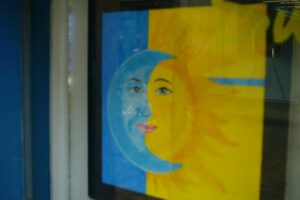
Artistic depiction of sun and moon faces

Liana S

Have you ever heard about glass painting? Glass painting is currently one of the fastest growing crafts in UK. The subject glass painting is so vast that one can just go on writing about it.

Painting on glass is different from painting on a book. They are different ways to paint on glass, ranging from using traditional oil paints to specialized glass paints. Traditional glass painting is painting done on the surface of a glass sheet. This type of method was followed to add minute details to faces and fold of clothing which couldn?t be added with the lead lines. Traditional glass painting is actually more of drawing than painting.

Types of Traditional Glass Paints are

? Vinegar Trace Paint
? Matt Paint
? Silver Paint
? Oil based stained glass paints

Glass Painting can also be done with paints that used to paint other surfaces. Some of the best examples would be oil paints, acrylic paints, model paints or automobile paints. Glass painting can be brushed by hand but air brushing can help you with better results.

Glass Paint Instructions:

? Select the right glass
? Clean the glass dry and place it over the top of pattern. Trace the pattern with a pencil with firm pressure.
? Apply liquid lead following the lines of the pattern under the glass. It would always be advisable to apply the lead from the center and work to outside.
? Mix stains and colors well. Always add dark colors to light colors
? Blend and shade with glass stain

How to clean up Glass Paints?
? Use a thinner or a cleaner to clean brushes, eyedroppers or airbrushes.
? Use Lacquer base glass paint or Lacquer based crystal paint to clean off your hands.
? Lacquer Paints are the best option to pat dry your hands than a cleaner.

Categories: Art Tags: Tags: , ,